
Hard Water to Soft Water Converter: How the Technology Works
Hard water is a common issue in many households and industries worldwide. It contains high levels of dissolved minerals, largely calcium and magnesium. While hard water is not a health risk, it can cause scale buildup in pipes, reduce the efficiency of appliances, and make cleaning more difficult. A hard water to soft water converter, commonly known as a water softener, is designed to address these problems using proven and reliable technology.
What Is Hard Water and Why Is It an Issue?
Water hardness occurs when groundwater passes through limestone and chalk deposits, absorbing calcium and magnesium salts. Over time, these minerals leave behind scale in plumbing systems, water heaters, washing machines, and industrial equipment. This buildup can shorten appliance lifespan, increase energy consumption, and raise maintenance costs.
Hard water also affects daily use. Soap and detergents do not lather effectively, leading to higher product usage. Clothes may feel stiff after washing, dishes can develop spots, and skin or hair may feel dry after bathing.
What Is a Hard Water to Soft Water Converter?
A hard water to soft water converter is a system that removes or neutralises hardness-causing minerals from water. The most widely used and scientifically validated method is ion exchange technology. Other technologies exist, but ion exchange remains the industry standard for residential, commercial, and industrial water softening.
How Does Ion Exchange Technology Work?
Ion exchange is a chemical process that replaces hardness minerals with sodium or potassium ions. The system consists of a resin tank filled with tiny resin beads and a brine tank that holds salt.
When hard water enters the resin tank, calcium and magnesium ions are attracted to the resin beads, which are pre-charged with sodium ions. As the hard minerals bind to the resin, sodium ions are released into the water. This exchange results in softened water flowing out of the system.
Over time, the resin beads become saturated with calcium and magnesium and lose their effectiveness. At this stage, the softening system initiates a regeneration cycle.
Regeneration Process Explained
During regeneration, a concentrated salt solution from the brine tank is flushed through the resin bed. The high concentration of sodium forces the calcium and magnesium ions off the resin beads and sends them to the drain. The resin is then recharged with sodium ions and is ready for the next softening cycle.
Modern softeners are designed to regenerate automatically based on water usage or time, ensuring consistent performance while minimising salt and water waste.
Water Softeners in the Market
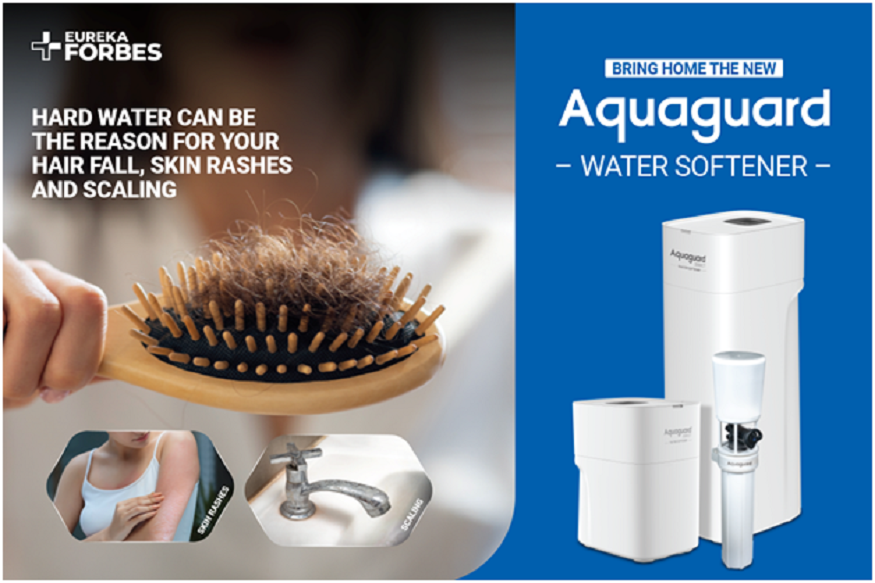
Modern water softeners for households, such as Aquaguard AWS I-2500, feature advanced ionic transfer technology to effectively remove hardness-causing minerals and reduce common hard water problems, including dry skin, hair fall, and stains on bathroom fittings. The system features fully automated regeneration, food-grade certified softening media for extended life, and up to 30-40% lower salt consumption through efficient control valves, helping save water.
Another reliable option, the Aquaguard AWS C-500 Water Softener, combines advanced ionic transfer with IntelliMix Technology to customise water softness based on usage, helping optimise salt efficiency. It also features an easy-to-read display that shows real-time data like water flow and remaining capacity.
Benefits of Using a Water Softener
A properly installed hard water to soft water converter offers several long-term benefits.
- Protects plumbing systems and household appliances by preventing scale buildup, helping extend their lifespan
- Improves the efficiency of water heaters and appliances, leading to lower energy consumption
- Reduces the amount of soap, shampoo, and detergent needed for cleaning and washing
- Helps keep bathroom fittings, tiles, and glass surfaces free from stains and white residue
- Makes clothes softer, brighter, and longer-lasting by preventing mineral damage to fabrics
- Improves bathing comfort by leaving skin smoother and hair softer and easier to manage
- Lowers maintenance and repair costs by reducing scaling-related damage over time
Conclusion
Hard water to soft water converters use advanced technology to solve a widespread water quality issue. Ion exchange remains the most effective and trusted method for softening water, delivering measurable benefits for homes and businesses.
Learning how the technology works enables users to make better choices, ensuring long-term performance and value.