
What Should You Check Before Buying a Car Vacuum Cleaner?
A car vacuum cleaner helps keep your car interior clean by removing dust, crumbs, pet hair, and dirt from seats and floor mats. Before buying one, it is important to compare factors such as suction power, portability, filtration, attachments, and durability to choose a model that suits your cleaning needs.
Key Factors to Consider Before Buying a Car Vacuum Cleaner
Choosing the right car vacuum cleaner depends on your cleaning habits, vehicle usage, and convenience requirements. Before making a purchase, it is important to compare features such as suction power, portability, filtration, attachments, and durability to select a model that suits your needs.
Read More: How Well Do Pressure Jet Drain Cleaners Work?
-
Suction Power (Performance First)
When choosing a car vacuum, suction power is the most important factor, as it determines how effectively the vacuum cleaner can lift dust, crumbs, sand, and pet hair from a car’s seats, floor, and crevices. In general, vacuum cleaners with higher wattage provide stronger cleaning performance, particularly for deep cleaning and removing heavy dirt particles. For example, if you have children or pets, a vacuum cleaner with stronger suction power will clean food crumbs and pet hair more effectively.
-
Power Source: Corded vs Cordless
Corded car vacuums plug directly into a power socket. These vacuum cleaners generally offer steady suction power and unlimited runtime. However, for deep cleaning, the car may need to remain parked near a power source.
Cordless vacuum cleaners are highly portable, lightweight, and ideal for quick spot cleaning. Since there are no wires, you can clean areas of the car, such as under seats, inside the trunk, and around the dashboard, with ease. Most cordless vacuum cleaners provide limited operating time, which may vary based on suction settings and usage patterns.
Choosing the right type of car vacuum cleaner depends on your cleaning habits and convenience requirements.
-
Portability and Weight
When selecting a vacuum cleaner for your car, it is important to choose one that is easy to carry, hold, and move around. Lightweight and compact models help reduce hand strain during cleaning. For example, if you plan to clean your car regularly, a portable cordless vacuum may be more suitable because it is simple to store and use.
-
Attachments and Accessories
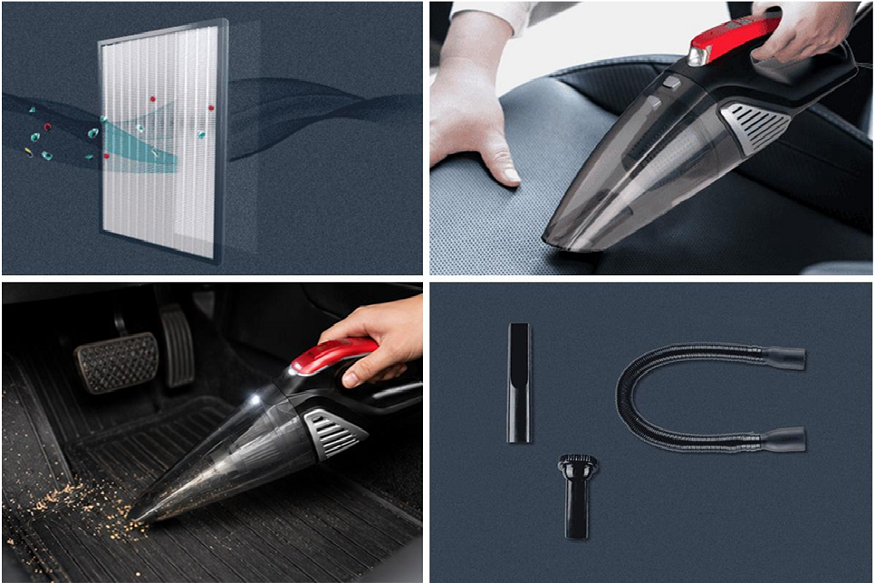
It is important to check the attachments and accessories included with the vacuum cleaner. Different parts of a car require different cleaning tools, making attachments an important consideration. A crevice tool helps clean narrow seat gaps and corners, while a brush attachment works better for dashboards and upholstery. Certain models also include flexible hoses that help clean difficult-to-access areas and improve overall cleaning flexibility.
-
Filtration System
The filtration system helps remove fine dust, allergens, and small particles collected during cleaning. Vacuums with HEPA filters are especially useful for maintaining cleaner air inside the car. This can be particularly beneficial for individuals sensitive to dust and airborne particles. Buyers should also check whether the filters are washable or replaceable for easier maintenance. It is equally important to evaluate how easy the dust container is to clean and how effectively the vacuum retains dust without releasing it back into the air.
-
Dust Capacity
Dust capacity affects how often the vacuum needs to be emptied during cleaning. Larger dust bins are more convenient for deep cleaning sessions, while smaller bins are suitable for quick everyday use. Transparent containers also make it easier to monitor when the bin is full. For example, family cars or vehicles with pets may benefit from a larger dust capacity to handle increased dirt and hair.
-
Noise Level
Noise level is an important factor, especially for people who clean their car frequently or in enclosed spaces. Certain car vacuum cleaners may produce high noise levels during use, which can become inconvenient during extended cleaning sessions. Buyers should look for models that offer a balance between cleaning performance and comfortable noise levels for regular use.
- Build Quality and Durability
A car vacuum cleaner should be sturdy enough to handle regular use and movement inside the car. Strong build quality improves durability and reduces the chances of damage from frequent handling or accidental drops. Buyers should check the material quality, attachment fit, and overall finish to ensure the vacuum can withstand long-term use.
-
Ease of Maintenance
Regular cleaning and maintenance help keep a car vacuum working efficiently over time. Buyers should choose a model that is easy to empty, clean, and reassemble after use. Washable filters and simple dust container removal can make maintenance quicker and more convenient, especially for people who use the vacuum frequently.
-
Brand and Warranty
Choosing a trusted brand can improve product reliability, service support, and spare part availability. Well-known brands also tend to offer better build quality and consistent performance over time. Buyers should check the warranty coverage and after-sales service, especially if they plan to use the vacuum regularly.
Read More: 7 critical signs that your air conditioning ducts need cleaning
Conclusion
The right car vacuum cleaner depends on your cleaning habits, car usage, and maintenance needs. Factors such as suction power, portability, filtration, and attachments should be balanced carefully before making a purchase. Creating a simple checklist can help avoid unnecessary features and poor buying decisions. A well-chosen car vacuum can save time, improve hygiene, and help keep your car interior consistently clean.